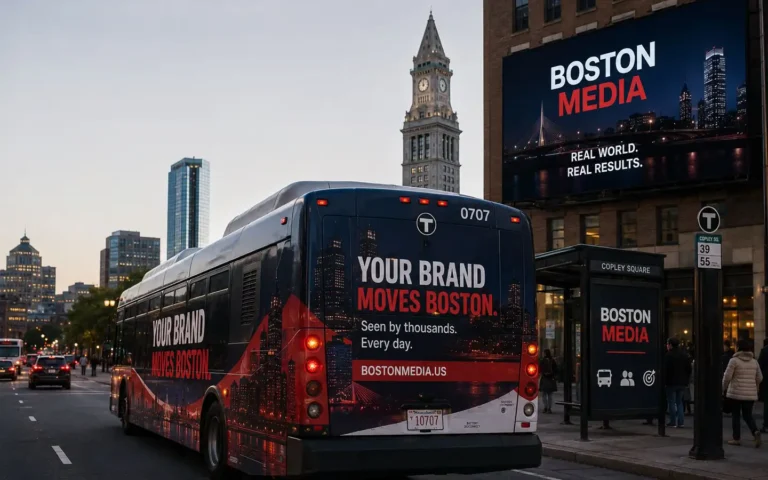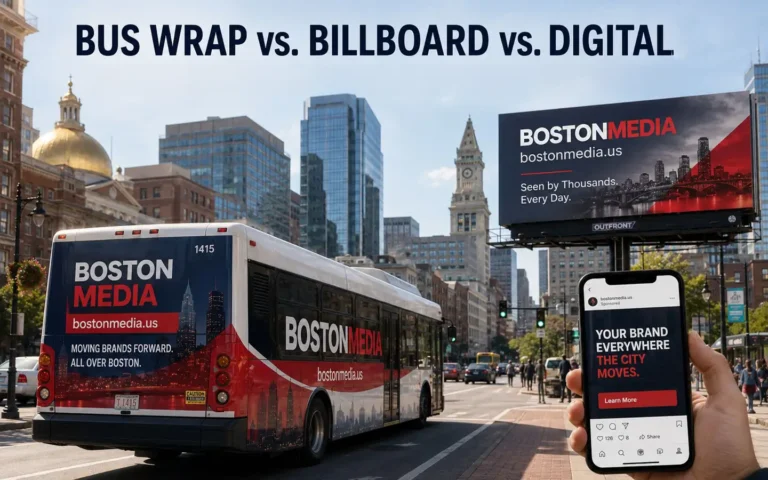

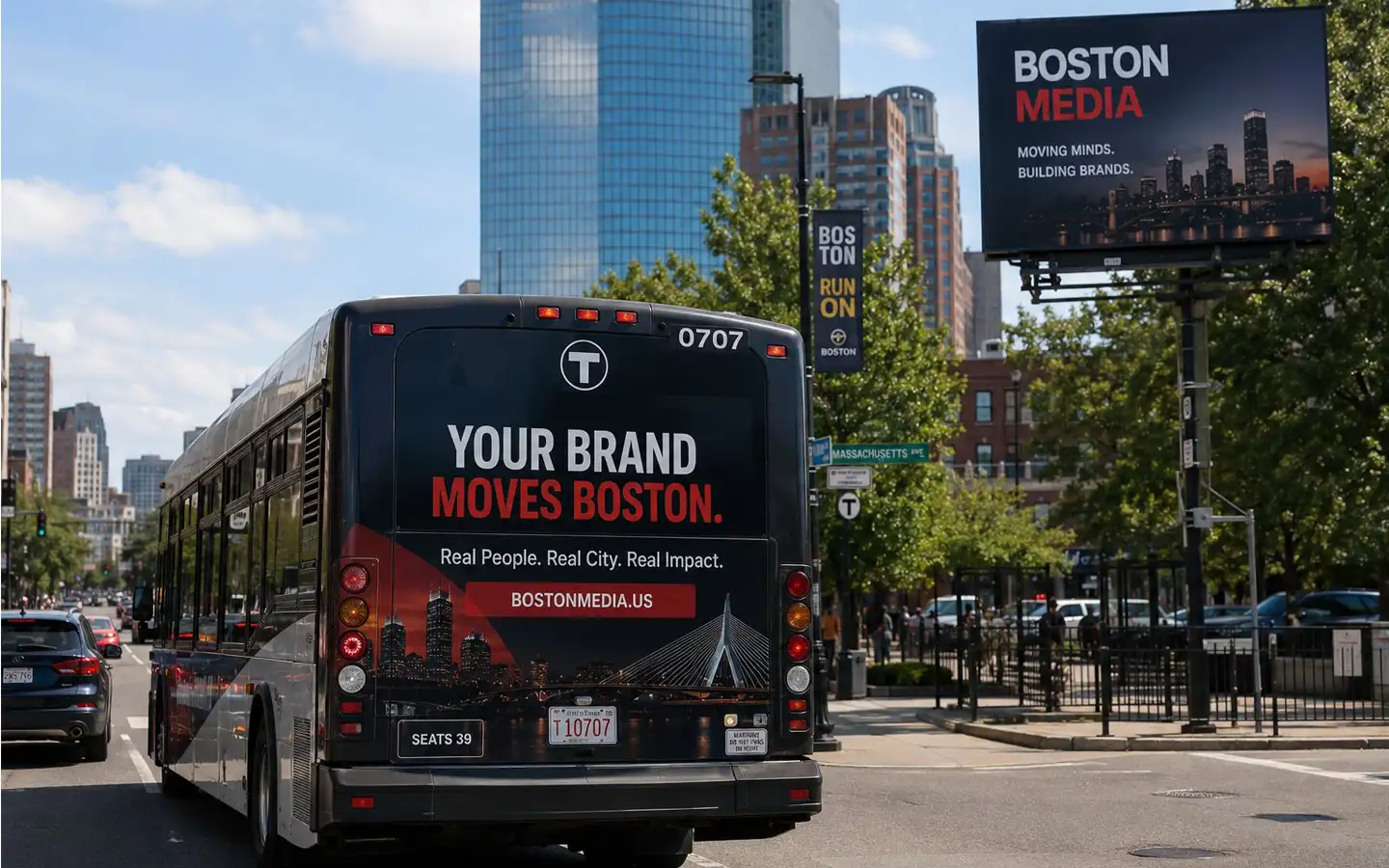
Most people who see a wrapped bus moving through Boston never think about how it got that way, and that’s exactly the point. A great wrap looks effortless from the outside. But behind that finished look is a process with real logistics, real deadlines, and real craftsmanship, one that starts weeks before a bus ever hits the road and continues until long after the campaign ends. Here’s what actually happens between a client saying yes to a campaign and a bus rolling down Newbury Street with their brand on it.
Before the Wrap: Design and Production
Every wrap starts as a file, not a vehicle. Once creative is finalized, it has to be adapted specifically for the shape and dimensions of the bus it will cover, accounting for windows, doors, wheel wells, and every curve of the vehicle’s body. This is not a simple resize job. A design that looks great on a flat rectangle can look distorted or unreadable once it’s stretched across a full-sized bus, so this stage typically involves close coordination between the client’s creative team and the print partner producing the wrap material itself.
Once the design is finalized, it moves to production, where it’s printed on large-format vinyl designed specifically for vehicle application, durable enough to withstand weather, road debris, and months of daily use without fading or peeling.
Permitting: The Step Most Advertisers Never See
Before a wrap ever touches a bus, there’s a permitting process that has to be cleared with the City of Boston. Vehicle advertising is regulated, and getting a campaign approved means making sure the design, placement, and vehicle itself meet the city’s requirements. This step rarely gets attention because it’s invisible to the public, but skipping it, or getting it wrong, can delay a launch by weeks. Handling this correctly from the start is one of the most valuable, and most overlooked, parts of running a professional wrap campaign.
Installation Day
Once the vinyl is printed and permits are cleared, installation happens. This is a skilled, physical process: professional installers apply the wrap in sections, working around every window, mirror, and door handle, using heat tools to help the vinyl conform smoothly to the curves of the vehicle without bubbling or creasing. A full bus wrap installation typically takes the better part of a day, and the vehicle stays out of service during that window, which means installations are scheduled carefully to minimize disruption to the bus’s regular route.
The difference between an amateur installation and a professional one becomes obvious fast; a poorly applied wrap bubbles, peels at the edges, and looks worn within weeks. A properly installed wrap should look clean and tight for the full length of the campaign.
Life on the Road
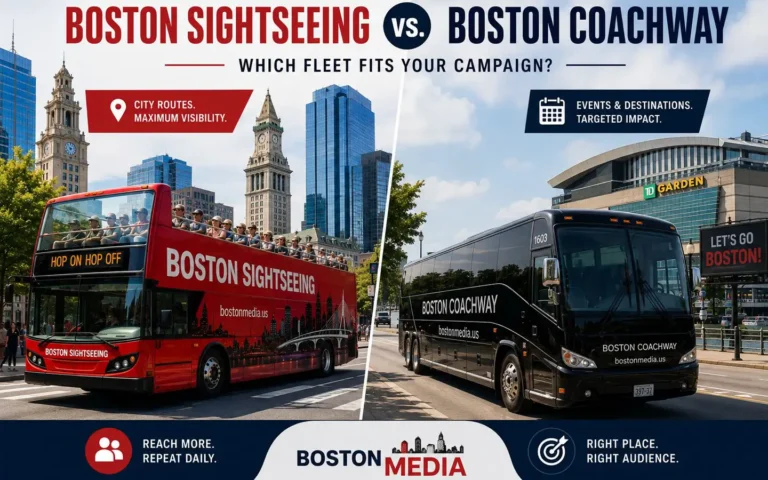
Once installed, the bus goes back into regular rotation, and this is where the actual advertising happens. Whether it’s running continuous downtown sightseeing routes or heading out for charter service and events, the wrap is now doing its job every single day the bus is on the road, passing through crosswalks, intersections, and neighborhoods, accumulating impressions with every mile.
This stage also includes ongoing maintenance. Buses get washed regularly, and wraps are inspected for any signs of wear, lifting edges, or damage, so that a campaign looks as sharp in its final week as it did on day one. This is an easy step to overlook, but it matters. A tired-looking wrap reflects poorly on both the vehicle operator and the brand it’s carrying.
Removal: Just as Careful as Installation
When a campaign ends, the wrap has to come off, and this is a more delicate process than people usually expect. Removing vinyl incorrectly can damage the vehicle’s paint underneath, so removal is done carefully, often with heat to loosen the adhesive, followed by a full cleaning to remove any residue and get the bus ready for either its next wrap or its unwrapped, standard livery.
Why This Process Matters to Advertisers
None of this is visible to the person standing at a bus stop who notices your logo go by. But every stage of it directly affects how your campaign actually performs: a rushed or poorly permitted launch delays your visibility, a poor installation shortens the effective life of your campaign, and inconsistent maintenance lets a strong first impression fade over time. The advertisers who get the most out of a wrap campaign are usually the ones working with a partner who treats every one of these stages, not just the final result, as part of the job.
If you’re planning a campaign and want to understand what the full timeline would realistically look like for your brand, reach out to our team and we’ll walk you through it, start to finish.